'Crime Pays': Andrej Nikolaidis's Uncomfortable Verdict on Srebrenica and the Limits of Justice
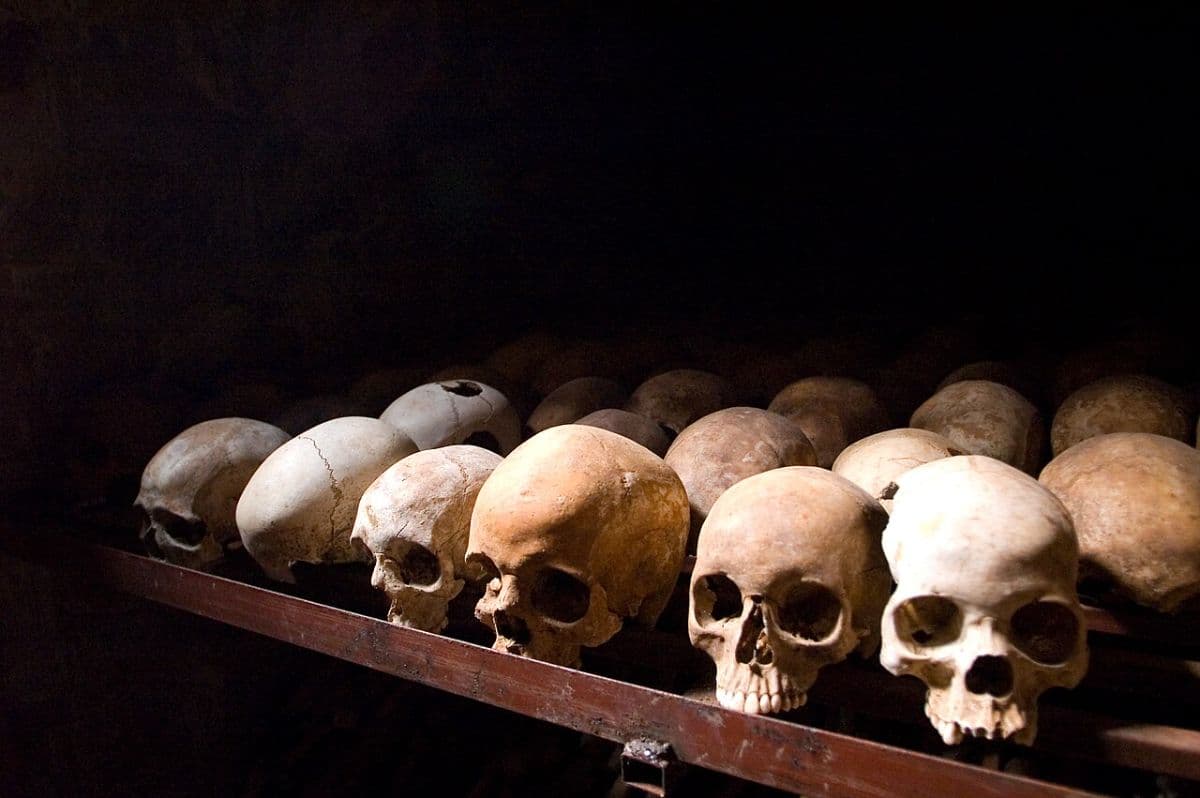
Thirty years after the genocide in Srebrenica, every July 11 brings familiar rituals: commemorations, solemn declarations of "never again," and renewed assurances that justice has prevailed. Yet Montenegrin writer and columnist Andrej Nikolaidis argues that beneath the language of remembrance lies a far more disturbing reality.
In a provocative essay titled "Crime Pays. The Greatest Reward Goes to the Greatest Crime: Genocide," Nikolaidis contends that the international community has failed to answer a fundamental question: what happens when justice punishes individuals but leaves intact the political outcomes of the crime itself?
His opening sets the tone.
"I feel great," a friend tells him when asked how he is doing. "The autopsy will reveal the rest."
For Nikolaidis, the annual commemorations deserve their own "autopsy"—one that examines not speeches or intentions, but results.
He begins with the numbers.
According to judgments of international courts, 8,372 Bosniak men and boys were murdered during the Srebrenica genocide. Those responsible have received prison sentences totaling 781 years.
Nikolaidis reduces those figures to a deliberately shocking calculation: approximately 0.093 years of imprisonment per victim.
The arithmetic is not meant as a legal formula. It is a moral indictment.
"No sentence," he effectively argues, "can correspond to genocide." But his concern is not that prison terms were insufficient in length. His question is whether the overall consequences of genocide have ever been meaningfully reversed.
That question extends far beyond the courtroom.
Nikolaidis observes that genocide denial continues to exist in parts of Republika Srpska and Serbia. Instead of becoming an uncontested historical fact, Srebrenica remains politically disputed decades after international tribunals established what occurred.
Meanwhile, he argues, the political landscape shaped by the war remains largely unchanged.
Republika Srpska continues to function as one of Bosnia and Herzegovina's constitutional entities. The wartime demographic transformation has not been undone. The territorial reality created through violence endured the peace.
For Nikolaidis, this is the central paradox.
International justice punished individuals.
History preserved outcomes.
His most controversial passage reduces that paradox to a simple analogy.
"If you rob a kiosk," he writes, "the money is taken back. If you commit genocide and are caught, everything achieved through genocide remains yours."
Whether one accepts that comparison or not, it captures the author's core argument: international law can prosecute perpetrators, but it has proven far less capable of reversing the political and territorial consequences of mass atrocities.
Nikolaidis also directs sharp criticism at the United Nations.
Srebrenica had been designated a UN "safe area," yet thousands were murdered after Bosnian Serb forces captured the enclave in July 1995. For him, the failure was not merely military but institutional. The world promised protection and failed to deliver it.
He is equally skeptical of decades of international investment in reconciliation.
Billions have been spent promoting dialogue, coexistence and facing the past throughout the Western Balkans. Yet Nikolaidis argues that reconciliation has too often demanded emotional concessions from victims while leaving many of the deeper political consequences of the crime untouched.
One of the essay's harshest observations concerns justice itself.
Victims, he suggests, are asked to reconcile themselves not only with loss but with the realization that those responsible for the broader political project largely retained what violence accomplished.
The conclusion is deliberately unsettling.
Nikolaidis rejects what he calls one of modern society's comforting illusions—that crime does not pay.
History, he argues, suggests precisely the opposite.
The larger the crime, the greater the reward.
From colonial conquests to ethnic cleansing and genocide, he sees repeated examples of violence permanently reshaping territories, demographics and political orders. Courts may imprison some perpetrators, but history often leaves the underlying gains intact.
His final reflection widens the lens beyond the Balkans.
If the rule of law represents one of Western civilization's highest achievements, Nikolaidis asks, what should one conclude when its greatest test exposes such profound limitations?
He does not dismiss Western civilization altogether. Quite the opposite. He writes that its true greatness lies in Bach, Homer and Hitchcock—in culture, philosophy and artistic imagination—rather than in legal systems that, in his view, cannot repair history's greatest crimes.
His closing sentence is perhaps the bleakest of all:
"The truth is that there is no cure for the world's monstrosity. Least of all a legal remedy."
Whether readers agree with Nikolaidis or reject his conclusions, his essay forces an uncomfortable distinction between justice as punishment and justice as restoration. The first may be achievable. The second remains, perhaps, beyond the reach of any court.
That question—whether law can ever undo the political legacy of genocide—remains as rele
vant today as it was when the graves of Srebrenica were first uncovered.